Breathing and respiration
In everyday life, we commonly use the words 'breathing' and 'respiration' interchangeably, but they are actually very distinct processes. We will be looking at them in detail in this section.
Key definitions
Be clear that you understand the differences between these key words:
Be clear that you understand the differences between these key words:
|
Breathing
This is the mechanical process whereby air is moved into and out of the lungs, and from there the exchange of carbon dioxide for oxygen in the blood. Breathing is also known as ventilation |
Respiration
This is a set of metabolic reactions by which cells convert glucose to energy. There are 2 forms of respiration:
See below for more details and specifics about respiration |
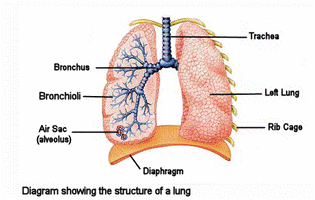
Anatomy of the respiratory system
Lungs - the lungs are found in your chest (or thorax to give it its proper name). There are two of them. They are bordered by the rib cage above and around the sides, and below by the diaphragm. The lungs are where gaseous exchange takes place
Diaphragm - strong sheet of muscle which separates the thorax from the abdomen. It is domed upwards in shape, and contracts and relaxes during breathing to
move air into and out of the lungs (see below)
Trachea - the tubes which carries air from the mouth to the entrance of the lungs. It divides into two bronchi as it enters the lungs, and is strengthened by horseshoe-shaped rings of cartilage
Bronchi (singular = bronchus) - two tubes which branch from the lower end of the trachea. These tubes take air into the lungs before dividing further
Bronchioles (singluar = bronchiole) - tiny tubes which branch from the bronchi and which carry air to and from the alveoli
Alveoli (singular = alveolus) - tiny air sacs at the end of the bronchioles. They look like bunches of grapes (see below for details of how these structures are adapted). Oxygen is absorbed and carbon dioxide is lost by the blood here. Thus they are the site of gaseous exchange
Capillaries - the smallest of the blood vessels. These form a mesh covering the alveoli and allow for gaseous exchange from the lungs to the blood to take place
Intercostal muscles - the muscles between your ribs. These contract and relax during breathing to move the rib cage up and down, respectively
Lungs - the lungs are found in your chest (or thorax to give it its proper name). There are two of them. They are bordered by the rib cage above and around the sides, and below by the diaphragm. The lungs are where gaseous exchange takes place
Diaphragm - strong sheet of muscle which separates the thorax from the abdomen. It is domed upwards in shape, and contracts and relaxes during breathing to
move air into and out of the lungs (see below)
Trachea - the tubes which carries air from the mouth to the entrance of the lungs. It divides into two bronchi as it enters the lungs, and is strengthened by horseshoe-shaped rings of cartilage
Bronchi (singular = bronchus) - two tubes which branch from the lower end of the trachea. These tubes take air into the lungs before dividing further
Bronchioles (singluar = bronchiole) - tiny tubes which branch from the bronchi and which carry air to and from the alveoli
Alveoli (singular = alveolus) - tiny air sacs at the end of the bronchioles. They look like bunches of grapes (see below for details of how these structures are adapted). Oxygen is absorbed and carbon dioxide is lost by the blood here. Thus they are the site of gaseous exchange
Capillaries - the smallest of the blood vessels. These form a mesh covering the alveoli and allow for gaseous exchange from the lungs to the blood to take place
Intercostal muscles - the muscles between your ribs. These contract and relax during breathing to move the rib cage up and down, respectively
The mechanics of breathing
As mentioned above, breathing (or ventilation) is the mechanical process of moving air into and out of the lungs so that gaseous exchange can take place (more about this below). Here I have indicated the physical changes that take place during breathing. It is movements of the rib cage and diaphragm which bring about ventilation. These movements result in pressure changes in the lungs. It is the changes in pressure in the lungs that causes air to move into and out of the lungs. Relate this to the Particle Model, and remember that pressure and volume are inversely proportional.
Remember, it is easy to work out the changes that are occurring if you can't recall them: sit with your hands on your rib cage and take a deep breath in and then release it. You will feel the movements of your body and this will allow you to answer any questions on breathing.
As mentioned above, breathing (or ventilation) is the mechanical process of moving air into and out of the lungs so that gaseous exchange can take place (more about this below). Here I have indicated the physical changes that take place during breathing. It is movements of the rib cage and diaphragm which bring about ventilation. These movements result in pressure changes in the lungs. It is the changes in pressure in the lungs that causes air to move into and out of the lungs. Relate this to the Particle Model, and remember that pressure and volume are inversely proportional.
Remember, it is easy to work out the changes that are occurring if you can't recall them: sit with your hands on your rib cage and take a deep breath in and then release it. You will feel the movements of your body and this will allow you to answer any questions on breathing.
|
Breathing in (inhalation)
|
Breathing out (exhalation)
|
When a person stops breathing naturally due to disease or injury, mechanical ventilators are used. Find out more about these machines by visiting these sites:
So, what is gaseous exchange?
Gaseous exchange is the movement of oxygen from the lungs into the blood supply, and the movement of carbon dioxide from the blood to the lungs. It occurs in the alveoli (air sacs)
Gaseous exchange is the movement of oxygen from the lungs into the blood supply, and the movement of carbon dioxide from the blood to the lungs. It occurs in the alveoli (air sacs)
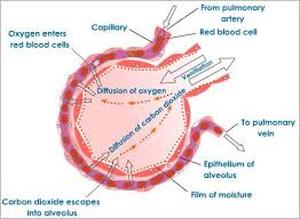
Adaptations of the lungs for efficient gaseous exchange include:
How do you think these adaptations make the lungs efficient? You should know this! |
For a lovely animation on gaseous exchange visit the BBC Bitesize website
|
Respiration
There are two types of respiration: aerobic and anaerobic. You need to know the differences between each, and when each might be occurring in your body, and also in other organisms.
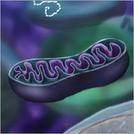 A mitochondrion
Aerobic respiration
- one of the most important enzyme-controlled processes
- occurs in all living organisms (that's animals, plants, yeast, bacteria)
- takes place in the mitochondria (infact, the number of mitochondria in a cell will give you an indication of how active that cell is. For example, a muscle cell will have many mitochondria as it needs lots of energy for contraction)
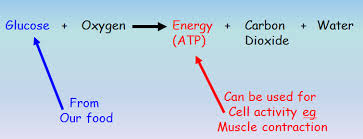
- provides the cells with ENERGY from glucose and oxygen
|
Energy from respiration is used:
|
|
Anaerobic respiration
- this type of respiration takes place in the absence of oxygen
- mainly occurs in the cytoplasm of the cell
- occurs in animal cells when insufficient oxygen is being supplied to them (for example, during bouts of strenuous exercise)
- In animals: glucose → lactic acid (+ little energy)
- occurs in yeast cells too. This provides us with useful waste products (see below)
- In yeast: glucose →ethanol and carbon dioxide (+ little energy). We can use the ethanol (alcohol) in brewing, and the carbon dioxide in baking to make bread rise
Effect of exercise
When we exercise:
When we exercise:
- our muscles contract more
- this means the rate of respiration increases (in order to provide the muscles with more energy)
- we breathe faster and heavier to increase the supply of oxygen needed for respiration
- our heart beats faster in order to pump the blood which is carrying oxygen and glucose to the cells that need it. The blood also removes the carbon dioxide (waste product of respiration)
- glycogen stored in the muscles is converted back to glucose, providing more fuel for respiration
- the arteries that supply the muscles dilate (get wider) in order to increase the supply of blood to the cells
- to prevent overheating, the blood vessels in the skin dilate, allowing heat to be lost by radiation. We also sweat which acts to cool us down
